Where to Get a Tattoo: Complete Guide to Body Placement
The body area you choose for your tattoo is a decision as important as the design itself. It affects pain during the session, healing, ink longevity, daily visibility, and even how the composition is read. This guide walks you through every body area, with concrete information based on real studio practice, not just averages.
Why placement matters as much as the design
Many clients come to the studio with a precise idea of the subject but a vague vision of placement. It's an approach that often leads to compromises: a design that looks perfect on paper can work badly on skin if the area isn't suited to it.
Every body area has its own characteristics: skin thickness, density of nerve endings, sun and friction exposure, the anatomy of muscular curves. All of these factors determine how the design will be perceived fresh, healed, and ten years down the line. A good artist guides you: a great artist will refuse a project if the chosen area will compromise it.
Low-pain areas: ideal for the first tattoo
If it's your first tattoo, starting with an "easy" area is a wise choice. It lets you discover your personal pain threshold without the stress of an intense session.
- Outer thigh: one of the most tolerable areas. Thick skin, rich adipose tissue, few nerve endings. Excellent long-term ink retention.
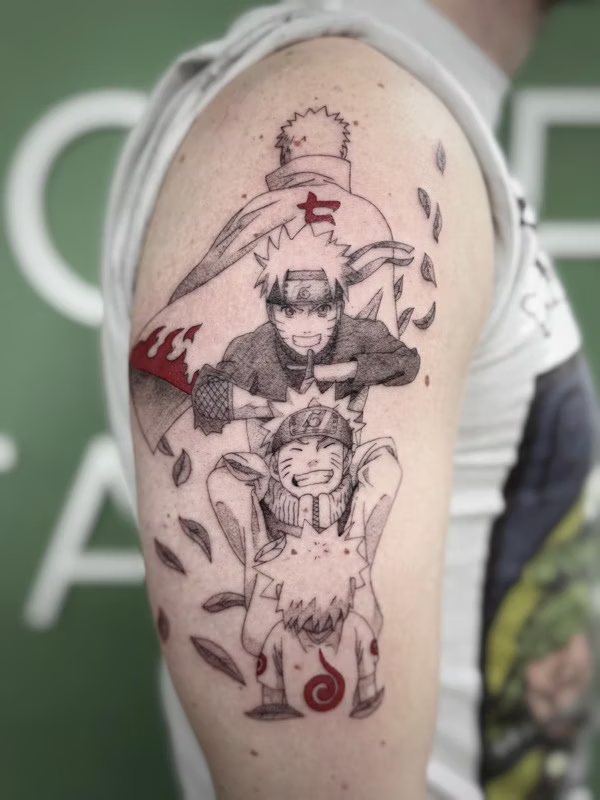
- Outer arm (triceps): a classic first-tattoo zone. Relatively flat surface, moderate-to-low pain, visibility controllable with sleeves.
- Calf: firm muscle with elastic skin. Tolerable for most people, excellent longevity.
- Shoulder blade: wide, flat area on the back, ideal for medium-to-large compositions. Low pain, though it requires someone else to monitor healing.
- Outer forearm: moderately tolerable, highly visible, excellent retention. One of the most requested placements overall.
High-impact visible areas
Some body areas communicate immediately: they're the first things others notice. Choosing them means making an aesthetic decision that is also a social one.
- Forearm: the most visible area day to day. Perfect for graphic pieces, lettering, compositions you want to see every day.
- Front calf: high visibility in shorts and athletic wear. Excellent for large, recognisable subjects.
- Collarbone and sternum: elegant areas with strong presence. Especially effective for symmetrical compositions or fine-line florals.
- Back of neck: high-impact area, visible with short or tied-up hair. Evaluate carefully for professional contexts.
- Upper back: a wide canvas for ambitious projects. Maximum visual impact in open-back clothing.
Consider your daily life: a highly visible tattoo will accompany you in every context of your life — work, family, formal events. It's not a question of "what others will think" but of how you'll feel in those situations. It's a deeply personal decision.
High-pain areas: an honest assessment
No artist should minimise the pain of certain areas. Knowing in advance what to expect is key to arriving prepared and experiencing the session in the best possible way.
- Ribs and side: among the most painful areas overall. Thin skin directly over bone, sensitive nerve endings, breathing that amplifies the sensation. Requires solid mental preparation.
- Sternum: similar to ribs but with amplified bone vibration. Long sessions are difficult to sustain.
- Inner arm: very thin skin, rich in blood vessels. Sharp, concentrated pain, but sessions are usually short.
- Spine: every vertebra is a bone contact point. High pain but a very requested area for vertical linear compositions.
- Hands, fingers, feet: bony areas with thin skin. High pain and, as we'll see, reduced longevity.
- Behind the ears and nape: thin skin directly over the skull. Needle vibration is felt intensely.
- Armpit and inner thigh: highly sensitive skin, rich in nerve endings, rarely exposed to regular cutaneous stimulus.
Areas that challenge technique (and patience)
Some areas aren't just painful: they're technically complex. Ink doesn't settle well, the skin regenerates faster than usual, the tattoo tends to fade. Tackling them requires awareness of the consequences.
Hands and fingers
Hand skin regenerates much faster than the rest of the body. Daily friction, frequent washing and sun exposure make these tattoos among the hardest to maintain. They need touch-ups every 2–3 years. Not suited to pure fine line.
Feet and inner ankle
An area subject to shoe pressure, moisture and friction. Healing is often difficult and there's a tendency for ink loss. It can work for small, stylised tattoos but not for fine detail.
Other technically problematic areas include the elbows (skin that constantly stretches and contracts, distorting the design), the knees (same problem plus a heavily stressed joint) and the palm of the hand (skin sheds constantly — no tattoo lasts long here). An honest artist will dissuade you from these areas if you don't have specific reasons for choosing them.
How the design adapts to the area
The relationship between design and area is symbiotic: a good artist doesn't just apply an image to the skin, but reimagines it in function of the anatomy. That's why bringing a visual reference to the studio doesn't mean getting an identical copy — it means providing a starting point for a design dialogue.
- Curved areas (calf, shoulder, ribs): require compositions that follow anatomical lines, not geometrically perfect images. A flat circle on a curved surface distorts when viewed from the side.
- Bony areas: prefer bold lines and solid masses. Fine details tend to blur over time because thin skin deposits less ink.
- Flat areas (forearm, back): maximum compositional freedom. Ideal for fine details, transparencies, complex compositions.
- Areas with high muscular variation: the design will move with the body. This can be used creatively but requires an artist with strong anatomy knowledge.
Longevity by area: what to expect after 10 years
Not all tattoos age the same way, and placement plays a central role. The main factors influencing longevity are: sun exposure, friction, cellular regeneration of the area, and ink uptake.
- Excellent retention (10+ years without touch-ups): inner thigh, covered side, upper back, inner arm (areas protected from sun and friction)
- Good retention (5–10 years): forearm, calf, chest, shoulder blade, outer arm
- Average retention (touch-up recommended after 5 years): ribs, sternum, upper shoulder, heavily sun-exposed areas
- Reduced retention (touch-up every 2–3 years): hands, fingers, feet, wrists, neck
The most important variable: sun protection is the single factor that most determines longevity. A tattoo on a technically "difficult" area that's kept protected from sun can last better than one on an "easy" area that's continuously exposed. SPF 50+ on tattooed areas is the best form of maintenance.
5 questions to ask your artist about placement
During the consultation, the conversation about placement should be open and detailed. Here are the right questions to bring.
- 1. Does this design really work in this area, or should I reconsider it? An honest artist will say if something needs modifying.
- 2. How will the tattoo move with my body over the years? Important for muscular and joint areas.
- 3. How much sun exposure will it get in my daily life? This affects the maintenance strategy.
- 4. Will touch-ups be needed? How often? Honest answers vary greatly by area.
- 5. How does this area integrate with any future tattoos? Essential for those building a collection.
Frequently asked questions — body placement
What is the least painful area for a tattoo?
The lowest-pain areas are the outer thigh, outer arm (triceps), calf, shoulder blade and outer forearm. These areas have thicker skin, good adipose tissue density and fewer exposed nerve endings compared to ribs, sternum, hands and inner arm. For a first tattoo, the outer forearm or outer thigh are the most manageable choices.
Where do tattoos last longest?
The areas with the greatest longevity are inner thigh, sun-protected side, upper back and inner arm — areas with low UV exposure and low friction. Forearm, calf and chest have good retention for 5–10 years. Hands, fingers, wrists and neck require touch-ups every 2–3 years to maintain definition.
Is it recommended to get a first tattoo on the ribs?
No, ribs are not recommended for a first tattoo. They're among the most painful areas: thin skin over bone, sensitive nerve endings and breathing that amplifies sensation. The result is extraordinary for long vertical compositions, but it's better to tackle this area after having experience with tattoos in more manageable zones.
Do hand tattoos fade quickly?
Yes, hand and finger tattoos have reduced longevity compared to other areas. Hand skin regenerates much faster than the rest of the body, and daily friction, frequent washing and sun exposure accelerate fading. They require touch-ups every 2–3 years and aren't suited to pure fine line, which loses definition quickly.
Still not sure where to get your tattoo?
A free consultation in Turin helps you choose with clarity.