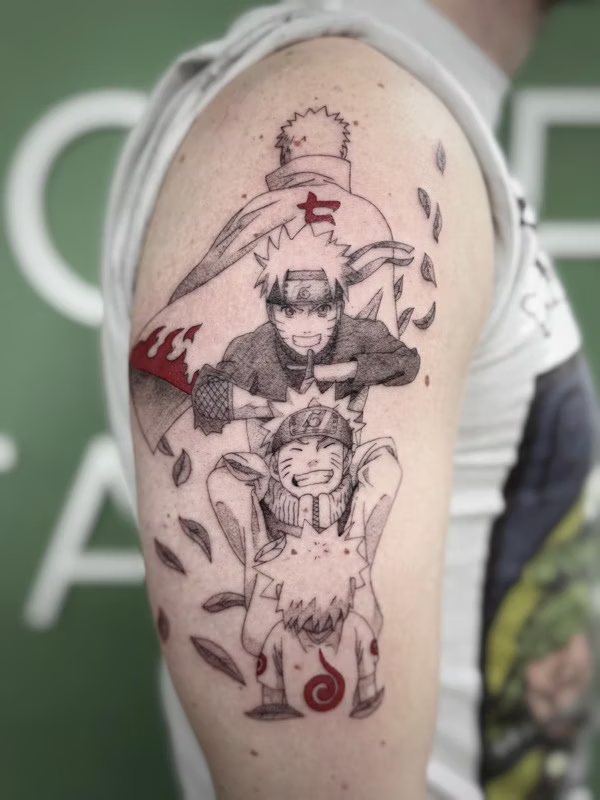
Most Painful Tattoo Placements
Pain depends on the body area. Thin skin and high nerve density increase pain. Knowing where you're getting tattooed helps you prepare.
The most and least painful areas
- Ribs
- Spine
- Elbows
- Knees
- Hands
- Feet
- Collarbone
- Upper arm
- Forearm
- Thigh
- Calf
Why it hurts more
Some areas of the body are anatomically more sensitive. These are the four main factors:
Thinner skin
Less protective layer between needle and nerves.
Less fat
Fat cushions. Less of it means more sensation.
More nerve endings
Hands, feet and ribs have high nerve density.
Bone close to the surface
The artist works near bone — you feel the vibration.
How to manage pain
You can't eliminate pain, but you can reduce it with the right preparation.
- Sleep well the night before your session
- Eat a full meal before your appointment
- Avoid alcohol in the 24 hours before
- Stay relaxed during the session — tension increases pain
Tip: for more sensitive areas, keep sessions shorter. Better to return twice than to push too hard and ruin the experience.
How long it lasts
- During the session: depends on placement and length
- After the session: a burning sensation for 2–3 days
- During healing: mild itching that decreases gradually
The pain map, area by area
Pain is subjective, but some areas are more sensitive for everyone: thin skin, bone close underneath and many nerve endings. This is a rough scale from 1 (mild) to 10 (very intense).
| Outer forearm, outer thigh, calf | 3–4 out of 10 |
| Shoulder, upper arm, upper back | 4–5 out of 10 |
| Wrist, ankle, neck | 6–7 out of 10 |
| Ribs, sternum, feet, hands | 7–8 out of 10 |
| Inner elbow, back of the knee, armpit | 8–9 out of 10 |
First tattoo: where to start
If it is your first tattoo, choose a "soft" area such as the outer forearm or upper arm. You will learn how you react to the needle without testing your limits. A small fine line piece in these areas usually takes less than an hour.
Style matters too: thin lines are quick, while solid fills (blackwork, dense shading) need more passes over the same skin and are felt more towards the end of the session.
Conclusion
Pain is manageable. Placement makes the difference. Choose based on your tolerance and prepare well — a tattoo done calmly is always a better tattoo.
Frequently asked questions
What is the most painful place to get a tattoo?
Usually the ribs, sternum, inner elbow, back of the knee, armpit, hands and feet: thin skin, bone close underneath and many nerve endings.
What is the least painful place?
The outer forearm, upper arm, outer thigh and calf: thicker skin and fewer nerve endings.
Can I use a numbing cream?
Talk to your tattoo artist first: some creams change the texture of the skin and affect the work. Do not apply them on your own before the session.
Does the pain change during the session?
Yes: the first minutes are the most uncomfortable, then the body adapts. In long sessions the skin becomes more sensitive towards the end: breaks help.
Decided on your tattoo placement? Book your free consultation at ETRA Turin.
Book a consultation →